
Sewing & Tailoring
Comparison price $2.65$1.99 24% off
↗
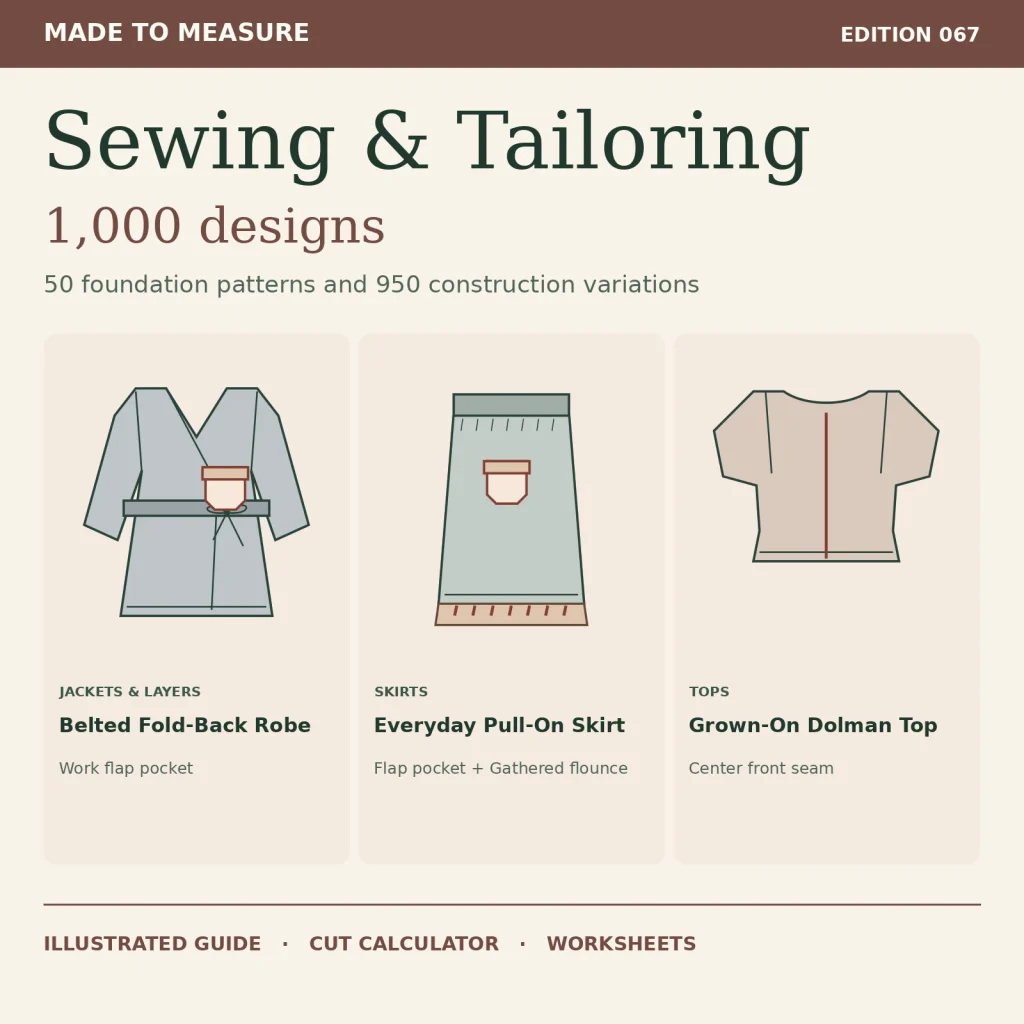
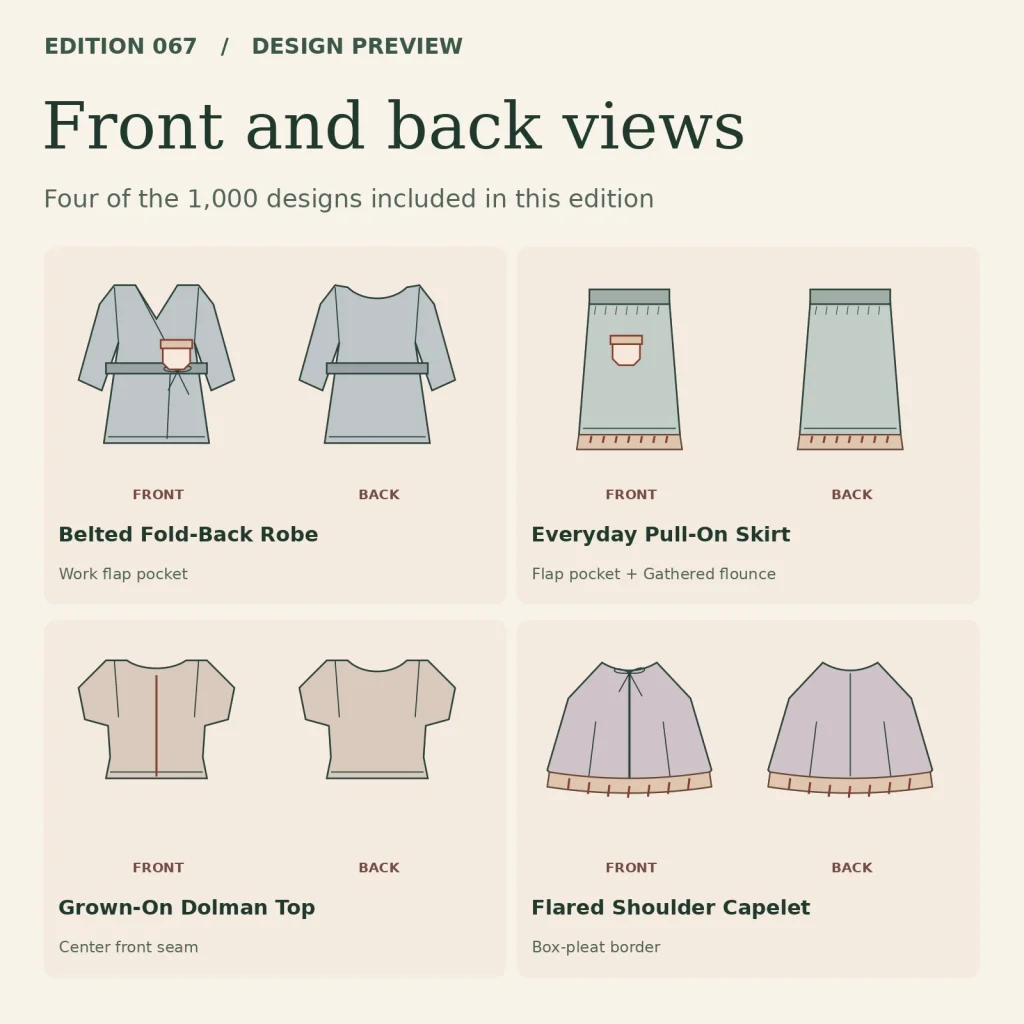
Preview is illustrative. The exact layout and content are in the downloaded files.
Made to Measure | 1,000 Sewing Designs | Edition 067
- ▤ HTML + PDF
- ↓ Instant download
- ↻ Two-sided preview
1,000 draft-to-measure designs with front and back drawings, a cm/inch calculator and sewing steps. All editions contain the same designs in a different order.
Watch the video
Learn how to measure a skirt edge, calculate its pleated border and print the sewing steps.
This public video is a demonstration. Your paid files are delivered after payment.
You may also like
Browse the shop ↗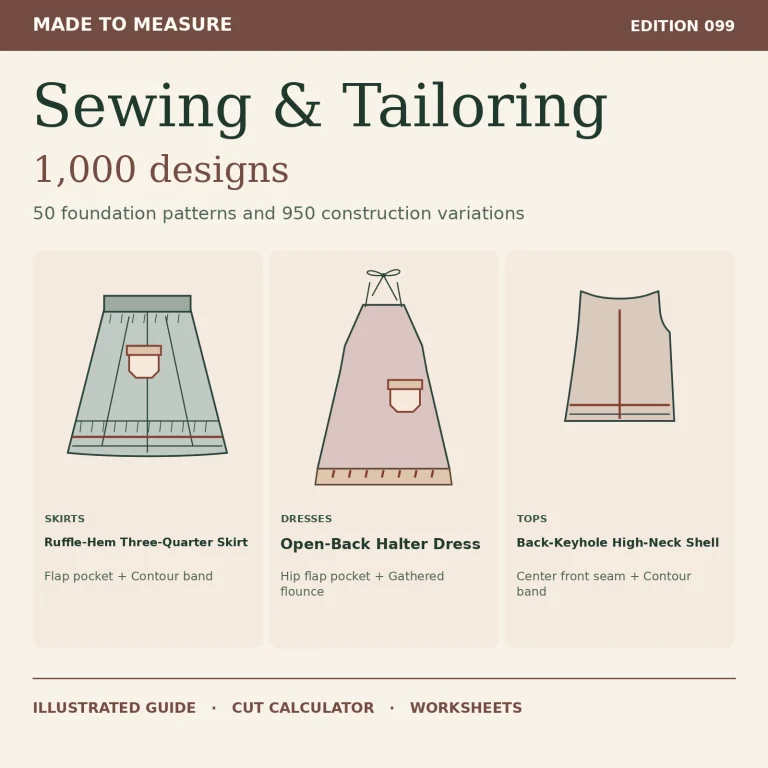
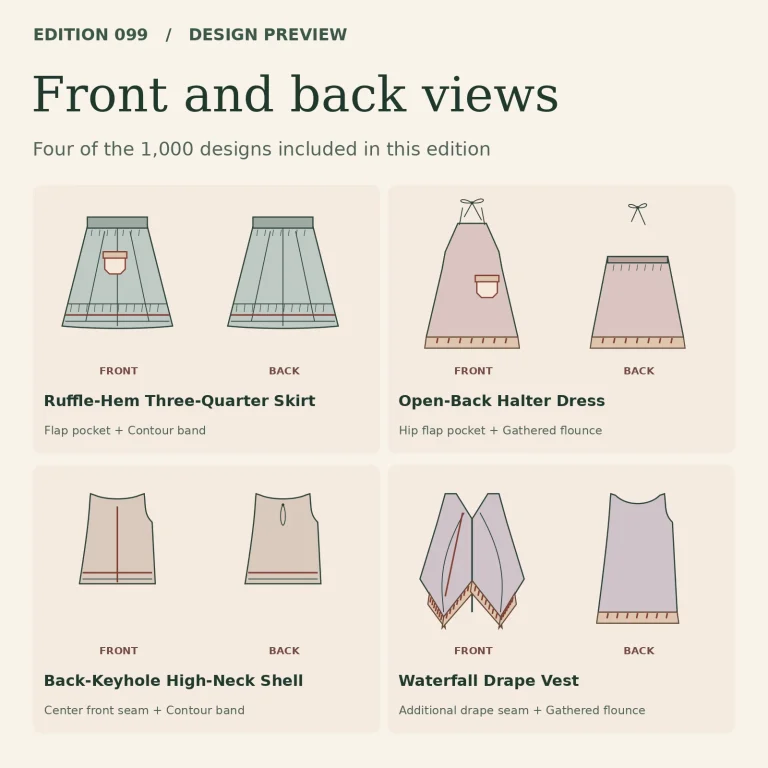
Sewing & Tailoring
Comparison price $2.55$1.99 21% off
↗
Made to Measure | 1,000 Sewing Designs | Edition 099
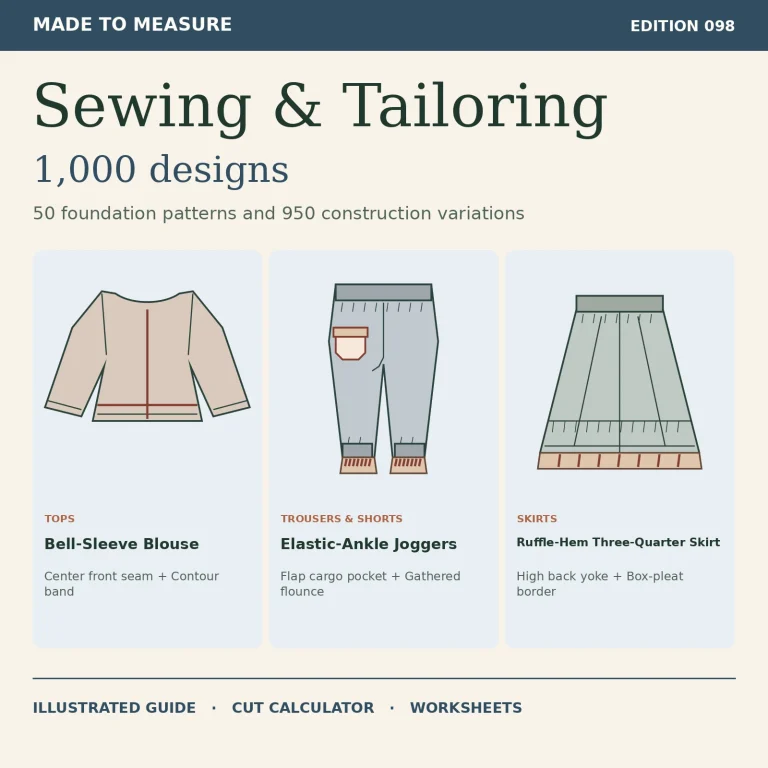
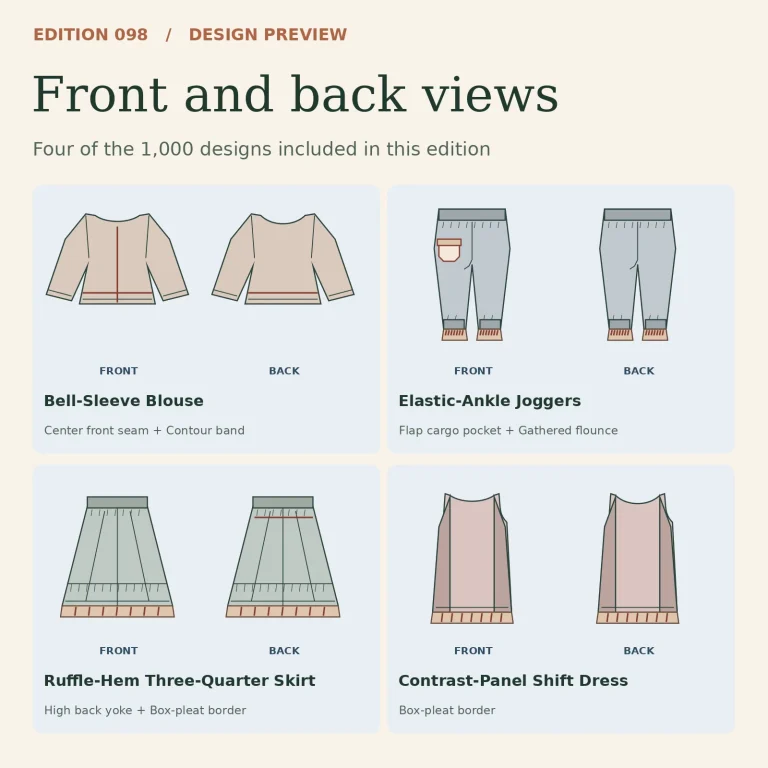
Sewing & Tailoring
Comparison price $2.45$1.99 18% off
↗
Made to Measure | 1,000 Sewing Designs | Edition 098
What’s included
- Offline catalog with 1,000 design guides
- 50 foundation designs in PDF
- Measurement and fitting worksheets
- Quick-start guide
Made to Measure | Sewing and Tailoring brings 1,000 draft-to-measure designs together in a searchable offline catalog. This is Edition 067. Every edition contains the same 1,000 designs. The edition number changes the catalog order and the projects shown on its cover. Choose any one edition to get the complete sewing library.
Find a design and plan your garment
The collection starts with 50 foundation patterns and adds 950 construction variations. It includes skirts, tops, dresses, trousers and shorts, jackets, aprons and draped layers. Explore a basic woven shell or elastic-waist skirt before working through more involved construction. Try a divided panel, shaped flap pocket or yoke, then explore how the result changes with a contour band, flounce, box-pleated border or scalloped edge. Front and back drawings show the intended construction for the selected design.
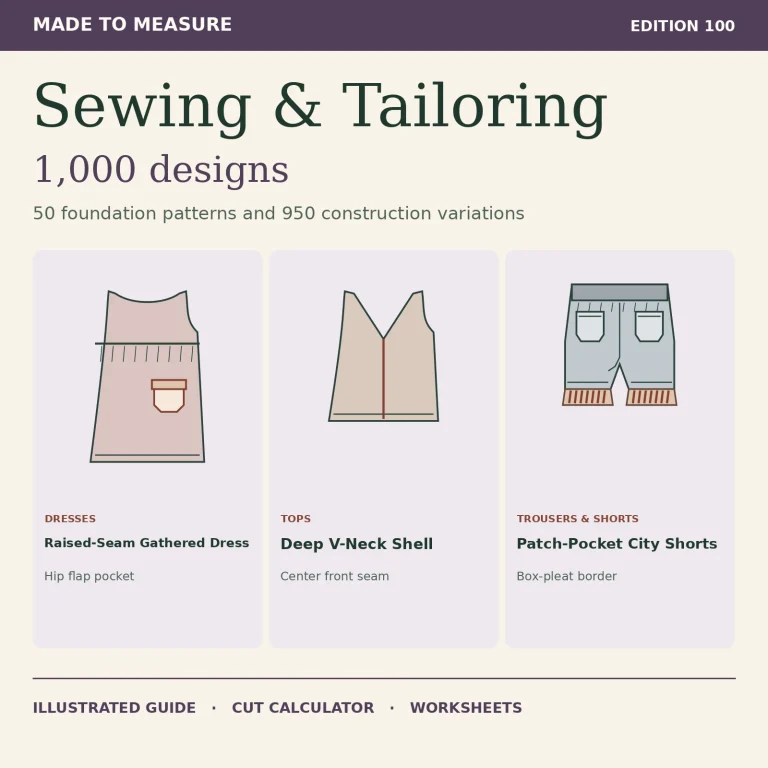
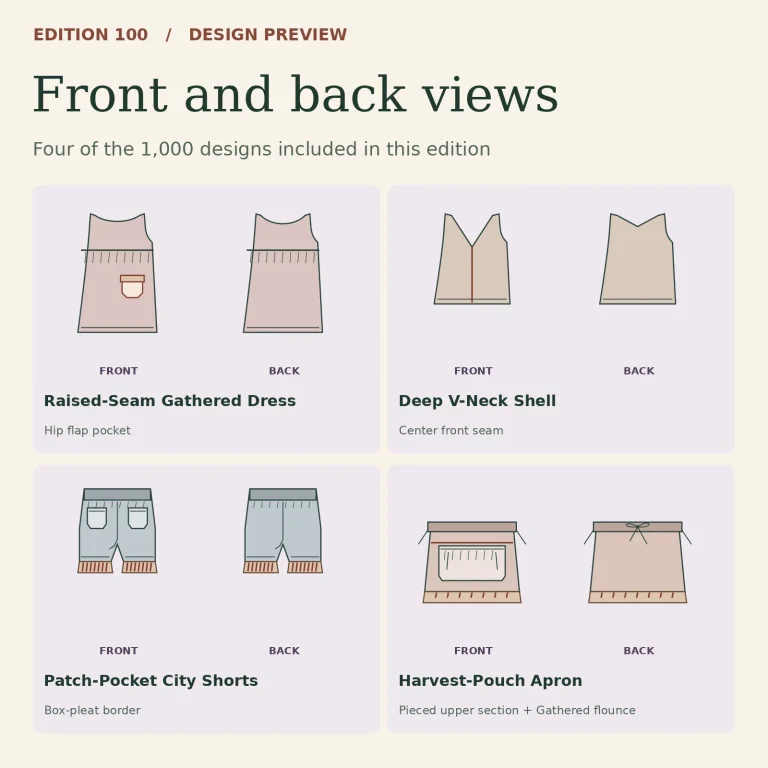
The featured projects for this edition include Belted Fold-Back Robe, Everyday Pull-On Skirt, Grown-On Dolman Top. Inside the catalog, you can browse the edition order or search by garment, construction feature or design code. Keep a note of your favorite codes to find the same projects again. Designs in the collection range from approachable first makes to choices that require careful fitting and sewing around layered or curved edges.
Measure and calculate your own pieces
Start with the measurement instructions for the selected project. Find the widest body areas required by the draft. Measure over the layers you plan to wear, and use the worksheets to record both the original measurements and changes made after fitting. The included 50-design foundation guide has a clickable index and extra notes on cloth direction, ease, cutting and fitting.
Enter the measurements in the offline calculator and select centimeters or inches. Load the worked example first if you want to see how the pieces relate. A cut rectangle has its allowances included. Shaped pieces provide coordinates or radii and tell you what to add at the seam or hem. Selected construction changes list extra pieces or show where to divide the foundation draft. The trouser and shorts designs start with separate front and back traces from a woven pull-on pair that fits.
Follow the construction and fit it on the wearer
Choose and prewash a suitable woven fabric. Use a similar test fabric to check fit before cutting the final pieces. Follow the numbered foundation sewing steps and the additional module for the selected panel, pocket, yoke or lower edge. Check that a closure, pocket or vent still works after the change. For added lower trims, measure along the actual basted seam before calculating the trim, and keep separate edges distinct when a design has two legs or open panels.
Included in the buyer ZIP
- A self-contained HTML catalog with all 1,000 illustrated designs and an offline cut calculator.
- A 108-page PDF of the 50 foundation designs, including its measurement, fabric and drafting guidance.
- Two printable pages for recording measurements and the results of a fitting.
- A short start guide. Each design in the catalog can be printed or saved as a PDF from a browser.
Extract the download to one folder. Open the catalog HTML in a modern browser and choose a design. Print the guide if you prefer to work from paper next to the sewing machine. Draw the pieces at the calculated dimensions and write the grain, seam allowances and matching marks on your draft. Save your fit notes with those pieces so the next garment can start from the adjusted shape.