
Independent Business Managers
Comparison price $15.00$9.99 33% off
↗
Preview is illustrative with fictional sample data. Open the downloaded workbook in desktop Microsoft Excel for the full, live version.
Cream Donut Business Finance Tracker
- ▤ XLSX
- ↓ Instant download
Track donut sales, ingredient purchases, batch costs and profit with an Excel finance dashboard and date-filtered production views.
Watch the video
Preview the Dashboard and Production worksheets with sample data.
This public video is a demonstration. Your paid files are delivered after payment.
You may also like
Browse the shop ↗
Independent Business Managers
Comparison price $15.00$9.99 33% off
↗
Bloom & Branch Floral Studio Business Manager

Independent Business Managers
Comparison price $15.00$9.99 33% off
↗
AquaGloss Car Wash Business Manager
What’s included
- One editable Excel workbook (.xlsx)
- Dashboard, Production and related worksheets
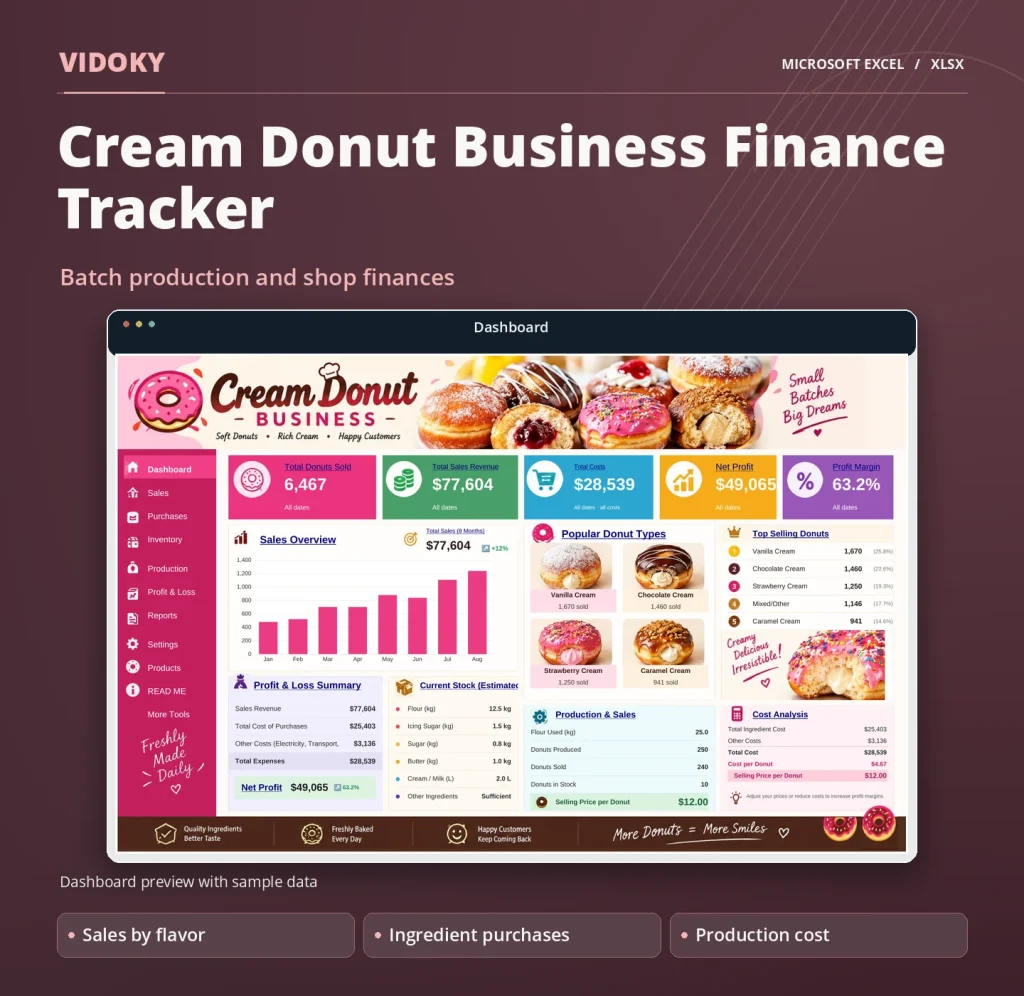
A busy donut shop needs to know how much it sold, which flavors customers chose and how much each batch cost to make. The Cream Donut Business Finance Tracker brings those records together in an Excel workbook with a colorful shop dashboard. It is designed for an independent bakery, home donut seller or small production team that wants to review the money and stock behind daily sales. The preview shows sample donut products so you can see how the workbook presents a real sales mix.
Start with sales and ingredient purchases
Enter sales by date, donut flavor, quantity, selling price and channel. Use the payment and notes fields to explain a transaction when the amount needs checking later. If you have separate counter, pre-order or delivery routines, decide how you will label them and apply those labels consistently. Use Sales View to inspect the latest sales day or select a different day or range, then return to the Sales sheet for any changes to the original entries.
Record ingredient purchases in Purchases and use the related view when you need to find a delivery date. Keep unit names consistent for the same item so you can compare quantities sensibly. A bag of flour and a kilogram of flour mean different things when you are estimating stock. The Inventory tab gives you a place to review available ingredients and see which quantities deserve a closer look before the next buying trip.
Use Production for what actually went into the batch
The Production sheet offers one section for daily batches and another for items used. Follow the sheet instructions for entering flour and matching ingredient usage to the batch date. Here you can record donuts produced and sold, which helps when a busy day leaves unsold stock or a refill batch was needed. Open Production View to review a specific day or range before changing a record.
Try it with a day when you made two popular flavors and sold one faster than planned. Enter the batch quantities, then capture the sales by flavor. At closing, compare production and sales against the estimated stock in the workbook. If a quantity appears out of line, check the date and the unit used for each purchase before changing your recipe or reordering ingredients. When you enter an ingredient once in the intended section, the resulting cost figure is easier to trace.
Review the numbers behind your bestsellers
The Dashboard includes donut units sold, sales revenue, costs, net profit and profit margin. It puts popular donut types alongside a sales chart, production and sales figures, and cost analysis. Use these panels to spot the flavors you sell frequently, then open Profit & Loss or Reports to examine the reporting period in more detail. A product can be popular while its packaging or ingredient cost is rising, so the sales and cost views belong in the same review.
Open the included XLSX in desktop Excel and read the READ ME sheet before creating your shop copy. Review the sample entries to see which columns are inputs. Keep your working version separate and use the workbook routinely for the transactions, purchasing and production notes you need to compare periods.
Reviews
5.0 out of 5 · 14 reviews
Faith · United Kingdom
Well suited to a regular check on ingredient costs and daily takings.
Michael · Philippines
A handy starting point for donut shop finances.
Sofia · Ireland
Setting aside time to compare ingredient costs and daily takings would be a good way to put this tracker for donut shop finances to work.
Leah · Germany
Practical idea for organising a review of donut shop finances.
Lerato · Belgium
A handy tracker option for donut shop finances. It makes sense to plan a month-end check around ingredient costs and daily takings.